Meniscus Tears: What Every Jiu Jitsu Athlete Needs to Know
Meniscus tears are one of the most common knee injuries in jiu jitsu. They are worth understanding because the knee matters if you want a long career on the mats and a future running after your grandkids someday.
What is the Meniscus?
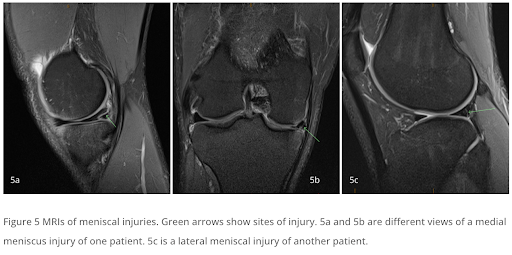
Your knee has two menisci — medial (inside) and lateral (outside) fibrocartilage cushions between your shin (tibia) and thigh (femur) bones. They help distribute force across the joint, absorb shock, and assist with stability.
In jiu jitsu, meniscus injuries typically happen with twisting, pivoting, or compression — like deep kneeling, while standing and wrestling, or when a planted foot doesn’t move with the rest of the body.
Symptoms You Should Watch For
If you ever feel:
• pain along the joint line
• swelling
• catching, locking, or inability to fully straighten
• pain with twisting or pivoting
…that’s a red flag for a possible meniscus tear.
Treatment Options
It’s not all-or-nothing:
Non-surgical (Conservative) Care
Many tears, especially ones without locking, start with physical therapy, progressive loading, and controlled movement. Rehab focuses on strength, mobility, and restoring mechanics… then gradual return to the mats
Surgical Options
If the tear causes mechanical symptoms or doesn’t improve, surgery may be recommended.
Meniscus repair (stitching the meniscus together) preserves tissue and helps long-term knee health, but recovery is longer (often 4–6+ months).
Partial meniscectomy (removal of torn tissue) returns quicker (6–10 weeks), but increases long-term arthritis risk.
An experienced clinician will use a combination of physical exam and imaging to guide this decision.
Prevention Focus
There’s no guaranteed meniscus “shield,” but reducing risk includes:
• Strong quads, glutes, and hamstrings
• Good hip and ankle mobility
• Thoughtful training when fatigued
• Smart technical choices in deep knee positions
Why It Matters
The meniscus carries a large portion of load across the knee. If a meniscus is torn or removed, it increases contact stress between the cartilage surfaces of the bones… thereby increasing arthritis risk long-term. Preserving and protecting meniscal tissue when possible helps keep you on the mats for years.
Final Thoughts
Meniscus tears are common in jiu jitsu, but they don’t have to end your time on the mats.
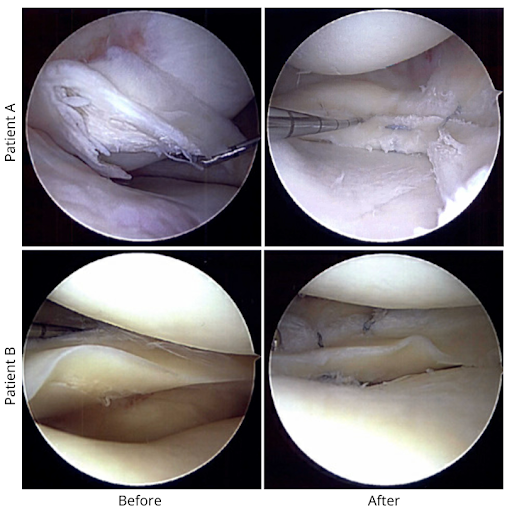
Early recognition, smart treatment decisions, and patience with rehab matter. Not every tear needs surgery, and preserving meniscal tissue when possible protects your knee long-term.
Check out an article I wrote for Jiu Jitsu Medicine for a more in depth discussion (https://jiujitsumedicine.com/meniscus/).
____
Dr. Megan Lisset Jimenez
Connect with Me
Let’s keep the conversation going:
📱 Instagram: @dr.meganjimenez
📘 Facebook: Megan Jimenez, DO
💼 LinkedIn: Megan Jimenez, DO