Achilles Tears: The Injury You Might See Coming
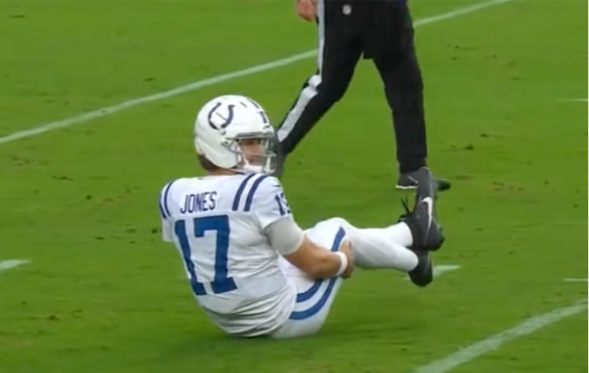
Fiancé looked at me the other day and said, “damn… Daniel Jones tore his Achilles”. This interested me because Daniel Jones used to play for the Giants (I was never a fan, but that's another story). Since my fiancé recently turned 40 and I always talk about achilles tears happening in older athletes, he persuaded me to write a newsletter about them.
The Typical Story
If you’ve spent enough time around aging athletes (especially in jiu jitsu, CrossFit, or military) you eventually hear the story:
“I pushed off… and it felt like someone shot me in the back of the leg.”
“I heard a pop.”
“I turned around, but no one was there.”
That’s the classic Achilles tendon rupture.
The one injury that seems to come out of nowhere… but almost never actually does.
Why Achilles Tears Happen (Especially age 20-40)
The achilles is the most common tendon rupture in the lower body. The Achilles is the thickest tendon in the body, but it ages like everything else.
1. Tendon degeneration over time
Microtears accumulate from years of running, jumping, pushing off the mats, sprawls, explosive takedowns, hill sprints, rucking, etc. Eventually, the tissue becomes weaker and you may not feel it yet.
2. “Weekend Warrior Syndrome”
The classic mechanism:
You train hard… inconsistently. Without cross training (ie: lifting, yoga, eccentric exercises)
Your tendon isn’t conditioned for explosiveness anymore, but your brain still thinks you can ball. That mismatch is deadly. Why? Because you go out on a Sunday after a beer to show the kids that you can kick their ass at pick up basketball.
3. Sudden explosive movement
Achilles tears almost always occur during:
• hard directional changes
• sudden push-off
• jumping
• a fast guard pass or scramble
• sprinting after months of not sprinting
• hard PFT training after long breaks
4. Poor ankle mobility + stiff calves
Limited dorsiflexion shifts stress to the tendon. Tight calves = a loaded spring that eventually snaps. May feel some pain in the calf while running.
5. Certain antibiotics & steroid injections
These are known risk factors. (No, you should not have a steroid injection into the Achilles region.)
The Warning Signs Athletes Ignore
Achilles ruptures almost always have early whispers before the big pop.
Look for these:
• Pain or stiffness in the Achilles first thing in the morning
If your tendon hurts until it “warms up,” that’s not normal.
• Pain during sprints, takedowns, or pushing off the mat
Especially at the bottom portion of the tendon
• A sensation of tightness or weakness when trying to explode
Your calf suddenly feels weak.
• Thickening or nodules in the tendon
Difficult to tell on exam, but can be seen on MRI (if ordered because of constant pain and failed therapy)
How to Prevent an Achilles Tear
This is where aging athletes can win, if they’re intentional. Not always, but it doesn’t hurt!
1. Strengthen Your Calves (Both Straight and Bent Knee)
The Achilles responds best to progressive loading, not stretching alone.
When people get injured, I tell them to do physical therapy… They often say, “I’ll stretch more”. Yes, stretching is wonderful, but it's not the whole story.
Do:
• eccentric heel drops
• calf raises
• single-leg variations
These help strengthen the tendon.
2. Improve Ankle Mobility
Stiff ankles force the Achilles to work harder.
Focus on:
• dorsiflexion mobility (knee-to-wall test)
• soft tissue work through calves
• controlled articular rotations (CARS)
3. Warm Up Properly — Especially Before Explosive Work
Cold tendons tear.
Your warm-up should include:
• calf activation
• glute activation
• light plyometrics (skips, hops)
• slow build-up before sprinting or fast-paced rolls
If you haven’t sprinted in 3 months, ease into sprinting over several sessions.
4. Don’t Train Explosive Movements When You’re Fatigued
Most Achilles tears happen at the end of practice when your form is sloppy, your tendon is fatigued, and your reaction time is down.
5. Respect Tendon Pain
Listen to your body. Take it easy if it’s talking to you.
When to See a Doctor
You need an evaluation if you experience:
• A pop
• Sudden severe pain
• Inability to push off or do a single-leg heel raise
• Significant weakness
• A visible gap in the tendon
Achilles ruptures require urgent evaluation — surgery is common for athletes wanting to return to high-level sport, though non-operative management can work for select patients. Studies show that 60-100% of athletes return back to sport after surgery.
Final Thoughts
Achilles tears feel random, but they’re not.
They’re predictable. Sometimes preventable. And treatable with good outcomes.
If you’re 30+, train hard, love jiu jitsu, love running, or are in the military — your Achilles deserves more respect than you’re giving it.
References:
Shamrock AG, Dreyer MA, Varacallo MA. Achilles Tendon Rupture. In: StatPearls. Treasure Island (FL): StatPearls Publishing; August 17, 2023. PMID: 28613594.
LaPrade CM, Chona DV, Cinque ME, et alReturn-to-play and performance after operative treatment of Achilles tendon rupture in elite male athletes: a scoping review. British Journal of Sports Medicine 2022;56: 515-520. PMID: 35144918.